Introduction
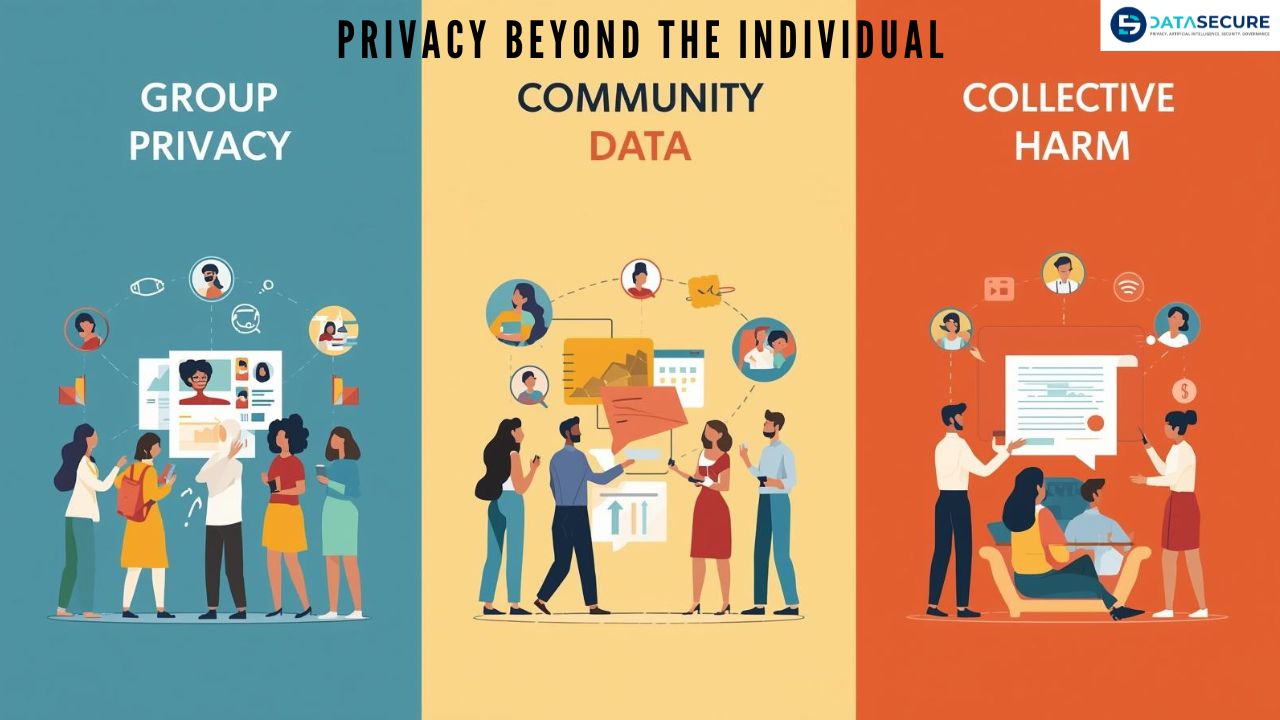
Privacy has traditionally been conceptualised as an individual right, an autonomous space where individuals control access to information about themselves. This individualistic framing underpins many constitutional doctrines and statutory protections globally. In recent years, however, technological developments and data-driven governance models have revealed a critical blind spot: the privacy of groups, communities, and collectives. Data practices often capture not just individual attributes but also patterns and traits that define or impact groups based on caste, religion, ethnicity, gender, geography, employment, or consumption behaviours. These group data attributes can be used in ways that harm communities collectively, even where individual consent or notice has been given.
In the Indian context, marked by deep social divisions, affirmative policies, and expansive digital governance, the concerns around group privacy are both pressing and under-examined.
Understanding Group Privacy and Community Data

Modern data ecosystems are characterised by large-scale data collection by institutions such as hospitals, banks, insurance providers, digital platforms, and state agencies, enabled by pervasive computing technologies and expanding digital infrastructures. Vast volumes of personal, behavioural, demographic, and socio-economic data are routinely gathered to improve service delivery and governance efficiency. However, the aggregation and algorithmic processing of such data no longer produce only individual profiles but generate collective representations of communities and social groups, allowing inferences to be drawn about populations based on shared characteristics, locations, identities, or behaviours.
This shift marks the emergence of group privacy as a distinct concern. Group privacy refers to the protection of data relating to identifiable collectives where harm arises not from individual exposure alone, but from collective classification, profiling, and inference. Even when data are anonymised or lawfully collected, aggregated processing can enable discrimination, stigmatisation, and structural exclusion of entire communities.
Recent technological practices, including large-scale digital tracing and predictive systems, demonstrate how data-driven governance can disproportionately impact already marginalised groups, transforming data into instruments of collective vulnerability rather than public benefit. As data analytics increasingly shape policy, welfare delivery, surveillance, and market access, protecting community data is essential to prevent collective harm and to ensure that digital systems do not reproduce social inequalities through technological means.
Forms of Collective Harm
Collective harms arising from group data practices can be categorised as follows:
- Discrimination and Segmentation: Algorithms or policies using group data can lead to differential treatment. For example, targeted lending decisions based on community attributes, or exclusionary welfare eligibility based on aggregated behavioural patterns. Even in the absence of explicit bias, algorithmic inferences can reproduce societal discrimination.
-
Stigmatization: Group attributes derived from data can stigmatize communities. For instance:
- Mapping disease prevalence to specific localities or communities without context can fuel social ostracisation.
- Predictive policing models based on community history can label whole areas as “high-risk,” disproportionately affecting marginalised groups.
-
Surveillance and Control: Collective data enables modes of surveillance that are not tied to individual wrongdoing but to group profiling:
- Mass monitoring in the name of security or public health.
- Targeted law-enforcement actions that focus on communities rather than individuals.
- Erosion of Social Trust: Groups may withhold participation in public life or digital services due to fear of collective profiling. This can deteriorate civic engagement and digital inclusion.
Indian Legal Landscape

India has made significant strides in data protection , but the existing frameworks are primarily individual rights-centric.
-
Data Protection Law: The Digital Personal Data Protection Act 2023
(DPDP Act
), focuses on consent, purpose limitation, and individual rights. Limitations include:
- No explicit protection for group data or collective harms.
- Consent mechanisms are individual by design, lacking provisions for community notice or group representation.
-
Constitutional Foundations: The Supreme Court’s recognition of privacy as a fundamental right under Article 21 in Justice K. S. Puttaswamy v. Union of India provides robust individual protections. However:
- The judgment does not explicitly engage with group privacy.
- Constitutional guarantees against discrimination (Article 15) and equality before law (Article 14) could inform group privacy jurisprudence but require expansion to digital harms.
-
Sectoral and Surveillance Laws: Laws governing law enforcement access to data (e.g., IT Act powers) and public programs (Aadhaar ecosystem) often process data at scale:
- Aadhaar authentication logs have been used as a proxy for tracking mobility patterns in regions.
- Lack of transparent safeguards for aggregated data use.
Comparative Insights
Although the Indian legal framework does not explicitly recognise group privacy as a distinct legal category, international developments offer important normative and regulatory guidance. In the European Union, the General Data Protection Regulation’s emphasis on profiling, automated decision-making, and decisional impacts implicitly acknowledges the possibility of collective harm, while ongoing policy debates increasingly focus on fairness, discrimination, and group-based impacts in algorithmic systems . Canadian privacy regulators have similarly recognised that data practices can affect communities differently, leading to the development of guidance frameworks centred on algorithmic fairness and differential social impact. In the United States, data protection discourse intersects with civil rights law, particularly through legal prohibitions against discriminatory outcomes arising from data-driven decision-making, demonstrating an integrated approach where equality norms function as safeguards against collective digital harm.
Pathways for Indian Reform
- Explicit Recognition in Law: Indian data protection law must move beyond an exclusively individual-rights model and formally recognise “group data” and “collective harm” as distinct legal constructs. This would allow communities and social groups to be acknowledged as legitimate subjects of data protection, enabling them to assert rights where data practices produce collective injury rather than individualised harm. Legal recognition should include mechanisms through which communities can challenge harmful data processing practices that affect them as a group, particularly where aggregated profiling leads to discrimination, exclusion, or social stigmatisation.
- Algorithmic Impact Assessments: Mandatory algorithmic impact assessments for high-risk data systems should be institutionalised to evaluate not only individual risks but also group-level and community-level harms. Such assessments must examine the potential for discriminatory, exclusionary, or stigmatising outcomes arising from automated decision-making and predictive systems. Public disclosure of assessment methodologies, risk indicators, and mitigation strategies is essential to ensure transparency, accountability, and democratic oversight over systems that shape collective social outcomes.
- Representative Oversight Bodies: Data governance frameworks should incorporate representative oversight mechanisms that include civil society organisations, community representatives, social scientists, and domain experts. These bodies should be empowered to scrutinise data uses with potential group impact and to intervene where collective harms are likely to arise. Such participatory governance structures are essential for ensuring that marginalised communities are not excluded from decisions that directly affect their digital visibility, classification, and treatment.
- Intersection with Non-Discrimination Law: Anti-discrimination frameworks based on caste, religion, gender, class, and other protected categories must be extended into the digital domain. Regulatory agencies should be empowered to enforce prohibitions against disparate impacts arising from algorithmic classification, profiling, and automated decision-making systems. This intersectional approach ensures that data protection does not operate in isolation, but as part of a broader equality and social justice architecture.
- Public Awareness and Empowerment: Effective protection of group privacy also requires social and institutional investment in public awareness and community empowerment. Communities must be informed about how aggregated data and algorithmic systems affect them collectively, not merely as individuals. Digital literacy initiatives, community advocacy, and participatory data governance can enable collective resistance to harmful practices and strengthen democratic accountability in data-driven societies.
Conclusion
As India accelerates its digital transformation, spanning digital identity infrastructures, data-driven welfare delivery, predictive governance systems, and AI-enabled public services, privacy can no longer be conceptualised as a purely individual entitlement. The realities of large-scale data aggregation, algorithmic classification , and collective profiling demonstrate that harms increasingly arise at the level of communities and social groups rather than solely through individual data breaches. In this context, group privacy, community data protection, and the prevention of collective harm become central to safeguarding democratic values, constitutional morality, and social trust in the digital age. Reimagining privacy as a collective right, grounded in the principles of human dignity, equality, and social justice, is therefore not merely a theoretical exercise but a constitutional necessity. This shift demands a reorientation of legal and regulatory frameworks towards protecting not only individual autonomy but also the collective identities, social relations, and community structures that constitute the fabric of Indian society. Without such evolution, digital governance risks entrenching existing hierarchies and inequalities through technological means, transforming data infrastructures into instruments of exclusion rather than tools of empowerment. A future-oriented privacy regime must thus embed community protection at its core, ensuring that technological progress advances democratic inclusion rather than undermines it.
We at Data Secure (Data Privacy Automation Solution) DATA SECURE - Data Privacy Automation Solution can help you to understand Privacy and Trust while lawfully processing the personal data and provide Privacy Training and Awareness sessions in order to increase the privacy quotient of the organisation.
We can design and implement RoPA, DPIA and PIA assessments for meeting compliance and mitigating risks as per the requirement of legal and regulatory frameworks on privacy regulations across the globe especially conforming to GDPR, UK DPA 2018, CCPA, India Digital Personal Data Protection Act 2023. For more details, kindly visit DPO India – Your outsourced DPO Partner in 2025 (dpo-india.com).
For any demo/presentation of solutions on Data Privacy and Privacy Management as per EU GDPR, CCPA, CPRA or India DPDP Act 2023 and Secure Email transmission, kindly write to us at info@datasecure.ind.in or dpo@dpo-india.com.
For downloading the various Global Privacy Laws kindly visit the Resources page of DPO India - Your Outsourced DPO Partner in 2025
We serve as a comprehensive resource on the Digital Personal Data Protection Act, 2023 (Digital Personal Data Protection Act 2023 & Draft DPDP Rules 2025), India's landmark legislation on digital personal data protection. It provides access to the full text of the Act, the Draft DPDP Rules 2025, and detailed breakdowns of each chapter, covering topics such as data fiduciary obligations, rights of data principals, and the establishment of the Data Protection Board of India. For more details, kindly visit DPDP Act 2023 – Digital Personal Data Protection Act 2023 & Draft DPDP Rules 2025
We provide in-depth solutions and content on AI Risk Assessment and compliance, privacy regulations, and emerging industry trends. Our goal is to establish a credible platform that keeps businesses and professionals informed while also paving the way for future services in AI and privacy assessments. To Know More, Kindly Visit – Your Trusted Partner in AI Risk Assessment and Privacy Compliance | AI-Nexus